

at ease app
context
This project was developed in collaboration with Isabel Valero and Thomas Jackman Kuwabara. The brief was to design an app that functions as a measuring tool. We chose to focus on anxiety levels, addressing a condition that affects a large portion of the population and is often difficult to track consistently.
concept
“At Ease” reframes measurement as support rather than control. Instead of treating anxiety as a static metric, the app is designed as a continuous system that helps users understand, track, and manage their emotional state over time.
The goal was to create a tool that feels safe, intuitive, and non-invasive, encouraging regular use rather than adding pressure.
process
Defined anxiety as a fluctuating, long-term condition rather than a fixed value
Identified key user needs: tracking, reflection, immediate relief, and support
Designed the interface and user flows in Figma
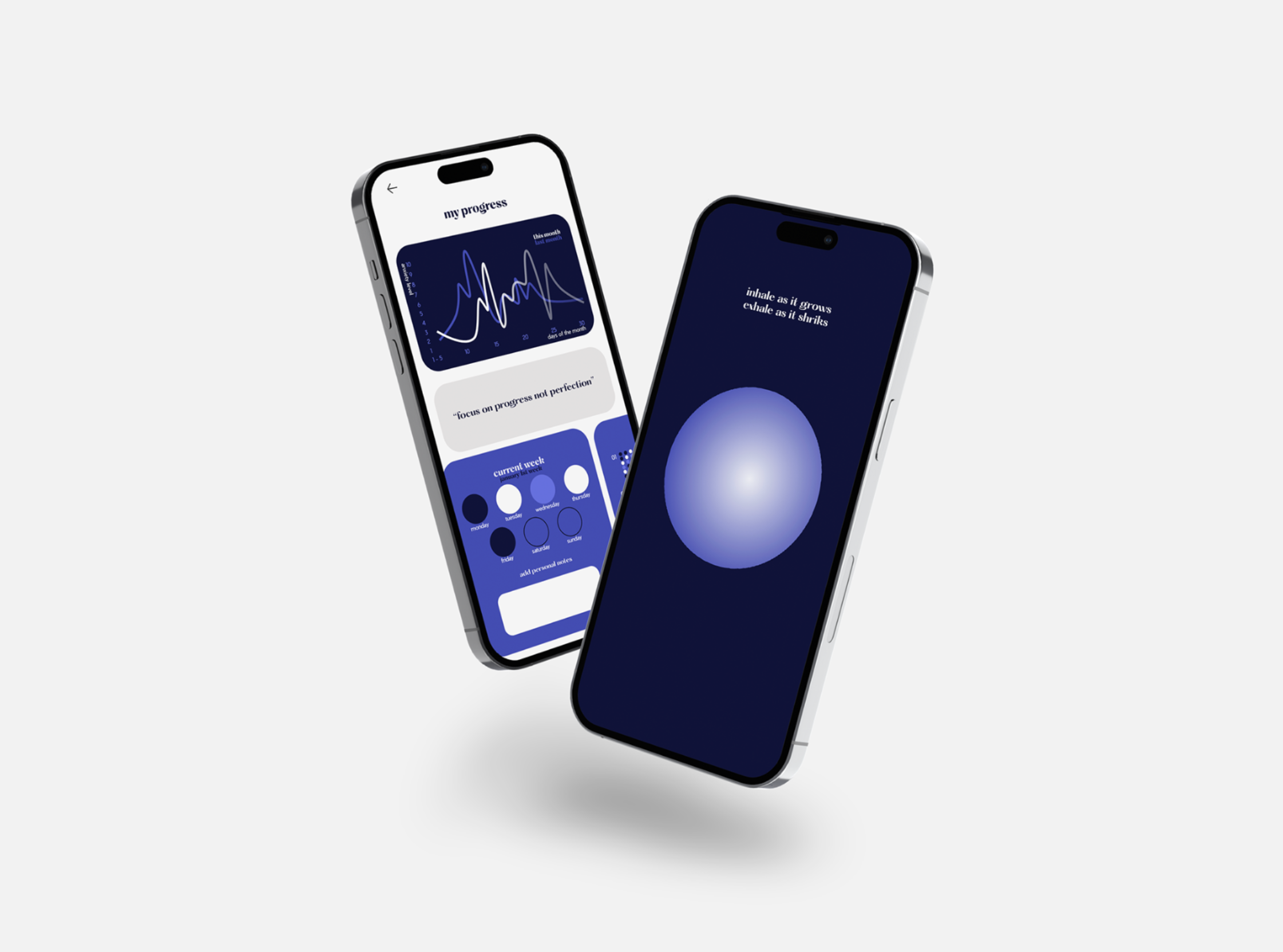
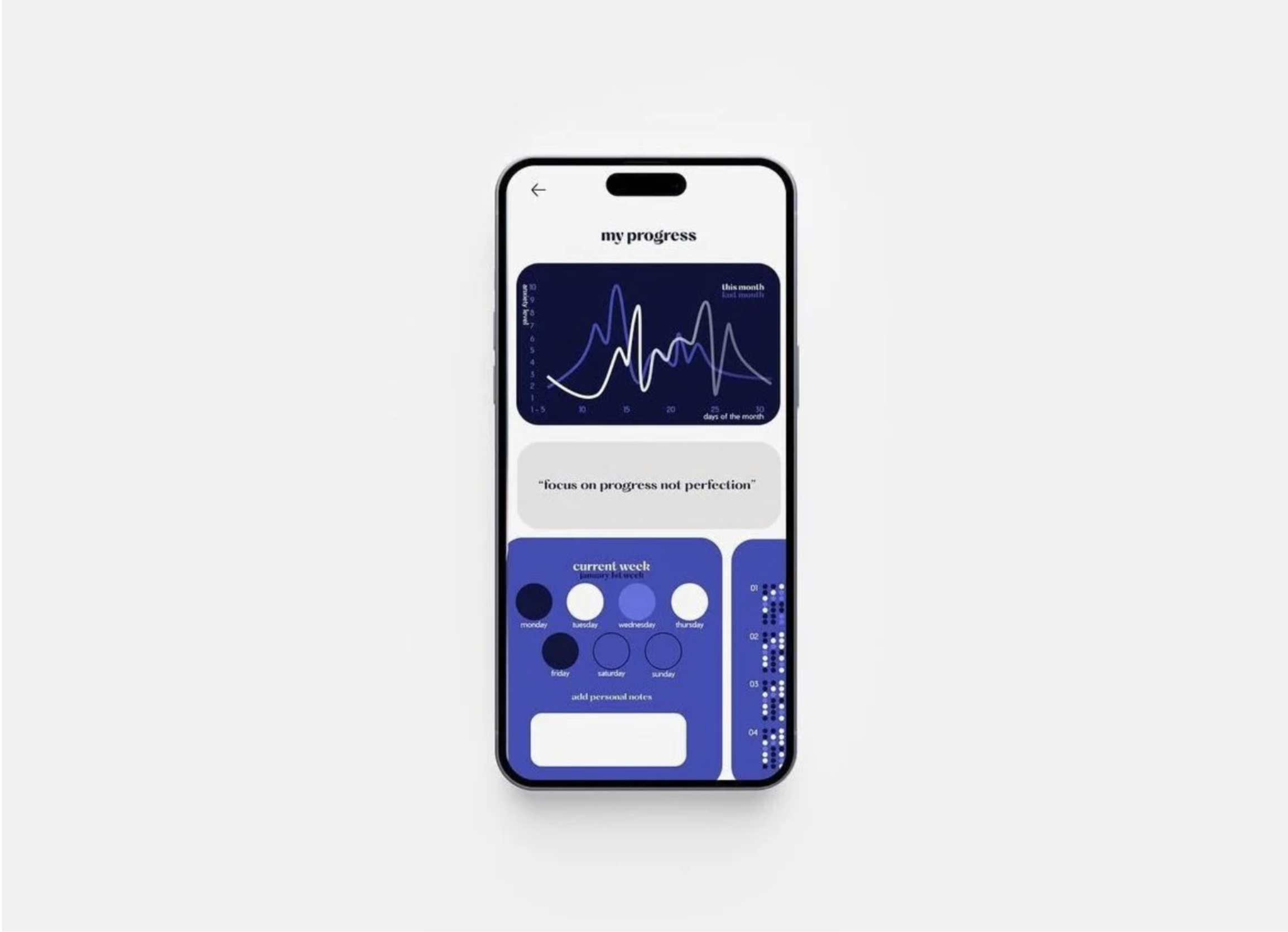
Structured the app into key features: journaling, symptom tracking, breathing exercises, and community content
Developed a visual language focused on calmness and clarity
key decisions:
Expanding “measurement” beyond numbers to include qualitative inputs (feelings, triggers, reflections)
Integrating multiple tools into one system to avoid app fragmentation
Using a soft blue and white palette with gentle typography (PP Hatton) to reduce visual stress
Designing a community space to complement individual tracking with shared experiences
outcome
A comprehensive mental health app that allows users to track anxiety levels, manage therapy appointments, and access tools such as journaling, breathing exercises, and grounding techniques. The app combines functionality with a calming interface to create a supportive and user-friendly experience.
reflection
This project taught me how to design for emotional states, not just functionality. I learned that measurement tools must be sensitive to the user’s experience and that design decisions such as color, typography, and interaction flow can directly impact how safe and supported a user feels. It reinforced the importance of empathy in UX design.

